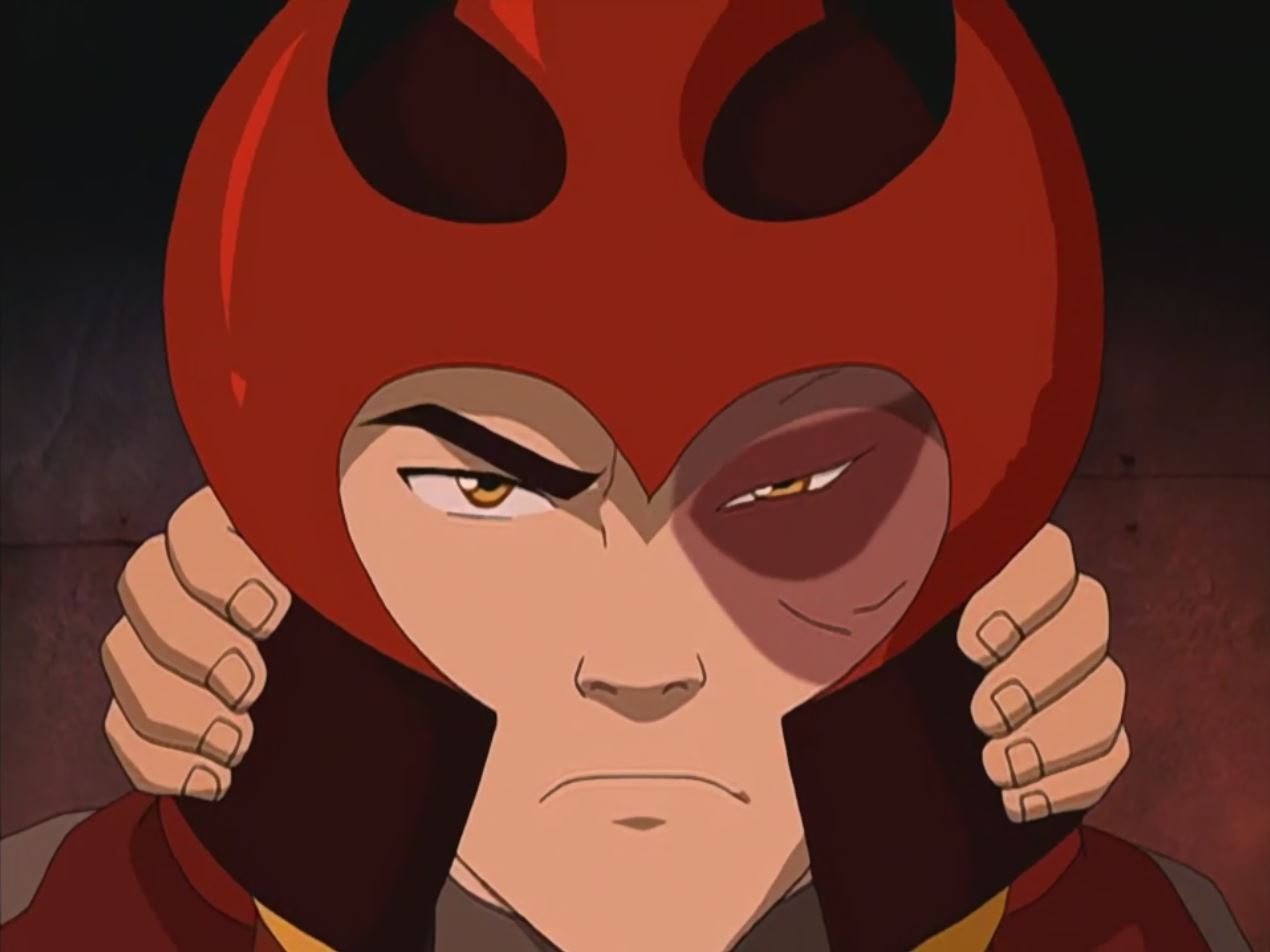
Episode 3 rounds off the introductory episodes and does so
in a big way, this episode might just be my favourite amongst the whole series,
with a distinctly dark tone and quite a heavy mood thematically. This is
probably the episode where Aang is at his most vulnerable; in no other episode
does it feel quite so apparent that Aang has suffered a terrible loss and our
first real hints at Zuko’s past combine to form the ultimate promise for what
the rest of the show could (and eventually would) become. This, for me, is the singular episode that
best encapsulates Avatar: The Last Airbender as more than just a nicely
animated kid’s show; but rather a tale with an epic scope and huge ambitions
that it delivers upon in a way few shows do. If you can’t tell already this was
the episode that got me into the series as a kid and it remains an excellent
episode now nearly 10 years later.

The episode opens with Aang excited to return home again.
Katara however warns him not to get his hopes up as a lot can change in 100
years, although this does little to dampen his enthusiasm. In the next scene
Zuko has taken his ship in for repairs after his last run-in with the Avatar
and warns his uncle not to mention this incident as other Fire nation troops
may get in his way should they know the avatar is alive. Introduced is
Commander Zhao, an ambitious member of the fire nation military who seeks the
glory of capturing the Avatar for himself. With this set up we immediately have
promise of two story lines; Aang confronting the realities of war and fate of
his people and Zuko confronting a figure of authority who lies in his path.

Now the episode cuts back to Aang and company where Katara
is again trying to warn Aang that the fire nation may have killed his people as
they did her mother, while Aang insists it to be impossible for the fire nation
to have found the temple without sky bison. With that they arrive at the
southern air temple, and we get a first taste for some of the truly exceptional
backdrops the series boasts; with a beautiful set of eastern styled towers
adorning the top of a steep mountain. Katara and Aang react accordingly with
awe and wonder for the former; happiness and some mix of hesitation and relief
for the latter.

Returning to Zuko and Iroh we begin to understand Zhao’s
suspicions of Zuko, as well as Zuko’s problems with authority; again
accompanied by an allusion to his father. As Zuko attempts to leave Zhao
receives word that Zuko had the avatar in custody prior to his escape and now
can justify holding Zuko and his uncle against their will. Returning to the
southern water temple Aang is disappointed by how empty it is and Sokka quickly tries to cheer up Aang by playing airball with him. In doing so Sokka discovers a fire
nation helmet and Katara calls Aang over before thinking better of it and
hiding it beneath some snow. It’s nice to see this sort of characterisation in
any medium, but particularly so early on; Katara is protective of Aang and
finds she can’t bring herself to hurt him like that. This scene is a great
little example of how human the characters feel, as well as how the show
runners treat their audience with respect; portraying complex (for a child)
emotions and characters in a genre typically overrun with simplified plots,
characters and dialogue. The audience; primarily kids, aren’t looked down upon,
and that made a big difference to me as a kid who was sick of patronizingly
simple children’s shows.

The next scene features a flash back to Aang’s time with
Monk Giatso; Aang’s mentor and friend. The whole scene is tinged with a warm
yellow and Giatso is instantly likeable; showing elements of a father figure, a spiritual guide and most importantly a friend and equal; Giatso embodies Aang’s
pleasant memories of his time at the temple. Going on as Aang remembers that he
was to meet someone to help him realise his potential as Avatar, the scene follows
Aang, Katara and Sokka as they reach the air temple sanctuary. Opening the door
through a display of Air bending we see one of the minor issues with the series
and how it has aged; the blending of hand drawn and CGI animation that even
then looked a little clunky, but now looks noticeably ill-fitting with the rest
of the show’s animation.

Following a brief interlude featuring Zuko and another of Iroh’s tea
jokes, we return to Aang and co. entering the sanctuary. Lit from the open
doorway in a cold, blueish hue, the scene takes a more sombre tone, opening
with a low bell as a sound cue and panning away from the group to reveal rows
of statues following a spiral pattern. The background and environment artists
really show their skill in this sequence between the dramatic blue lighting, to
the detail on the statues themselves, the rows of statues seem inspired by the
Terracotta warriors and the tone of the scene certainly makes them feel equally
important. Katara quickly notices that they’re lined up in a pattern, with the
subject of the statue hailing from Air nomads, Water tribes, Earth kingdom and
Fire nation in that order; an order which Aang recognises as the avatar cycle,
from which comes the realisation that these statues were made of Aang’s past
lives. Coming to a stop at the centremost statue Aang finds that he recognises
the figure as that of Roku, the avatar before him. Enter a lemur who sparks a
chase between a starving Sokka and a joyous Aang. I love the music they use for
this sequence and as it was first used during the penguin sledding sequence
I’ll refer to it as the penguin sledding song in future (or not, because that’s
a terrible name), but regardless the music is fantastic in this little scene as Aang quickly pulls ahead of Sokka.

Again the action cuts back to Zuko, but this time the scene
is quite significant; Zuko challenges Zhao with the claim that he will capture
the Avatar which Zhao laughs at, provoking Zuko into challenging him to an Agni Kai or firebending duel. As Zhao leaves the tent he jibes that it’s a shame
Zuko’s father won’t see the humiliation Zhao aims to bestow upon him. With Zhao
now gone Iroh warns Zuko that he must remember what happened the last time he
duelled a master; as this line plays out the camera pans from the right side of
Zuko’s face to his scarred left and stopping there as Zuko declares “I will
never forget.” Thus the setup for Zuko’s feud with Zhao is established,
alongside a few further allusions to Zuko’s relationship with his father and
how desperate he is to reclaim his father’s approval. With the closure of this
scene the setup is complete for what in my eyes is the single best fight
sequence (although not the best set-piece) in the whole show.

Cutting back to Aang, we re-join him as he enter a building
the Lemur has just entered. With a somewhat clunky fade-out the penguin
sledding song ends and a darker tune begins. Aang pulls aside a second curtain
within the building to find the remains of a collection of fire benders
surrounding the robed skeleton of an airbender whom Aang recognises as having
been Giatso. Aang falling to his knees and crying after learning of the death
of his friend and mentor is a powerful and tragic scene; one I remembered as
being quite upsetting as a child, as it still is, and as Sokka enters and
attempts to comfort Aang his sadness quickly turns to anger, sparking the
glowing eyes and tattoos that we saw previously as Aang emerged from the
Iceberg and when he used waterbending against Zuko in the previous episode. As
his eyes begin to glow so to do the eyes of the statues in the sanctuary and in
other temples in the other nations and seeing this Katara rushes back towards
where she saw Aang run knowing something is wrong. Katara, after learning what
happened from Sokka, then goes to try to calm Aang down.

Returning now to Zuko and the Agni kai begins. As Zuko’s
initial attacks do little to Zhao and he quickly gains the upper hand, closing
in on Zuko. Zuko; now on the ground and with Zhao’s impending final strike
coming in, quickly spins, knocking Zhao off his balance and subsequently
continues to force the now off balance Zhao back with some simple steps and
blasts of flame from his feet; eventually culminating in knocking Zhao over and
leaving Zuko as victor as he chooses to spare Zhao. As Zuko turns to leave Zhao
makes to strike his unguarded back which Iroh quickly prevents, labelling Zhao
as disgraceful in defeat and praising his nephew for having, even in exile,
more honour than Zhao. Heavily grounded in real world martial arts the fight feels natural despite the fire they conjure out of thin air and it feels almost like watching a sport; with shifts in advantage and momentum, shifts that are matched to the music set behind it which is equally fantastic. The people responsible for the fight choreography for this scene deserve a special mention for this phenomenal fight.

Cutting back now to Katara as she tries to calm Aang down, I’m
struck immediately by the lighting; previously cold blues and warm yellows, now
the scene is lit by a strong violet light. Katara succeeds in calming Aang down by assuring him
that he has a family in Sokka and Katara now, even if his past friends are now
gone. I love the roles the characters play here; Katara playing as the
emotional support for the hero rather than the other way around as is so often
the case (one of many examples of the way the show expertly handles gender and
gender roles as well as crafts a story with somewhat atypical characters, i.e.
the fairly feminine Aang, the strong willed Katara and the intelligent and
physically less capable Sokka, which all represent minor inversions of the
character archetypes you might normally expect to see). Book-ending Aang’s
story is the return of the lemur who offers food to Sokka and is named Momo by
Aang.

For me the third episode is all about the fulfilment of the
needs of its characters; Sokka gets his food, Zuko gains acceptance from
someone who isn’t his father, Katara finds a way to balance her kindness with
what she needs to do and Aang faces the reality that all of his friends and
family are gone. For each of these characters there is some struggle involved
in the search; and the outcome for each person isn’t necessarily what they
desired or expected.

This run-through of the third episode is far too long, but
there is such an immense amount of key themes and character developments to unpack
here that I thought it best to pay extra attention to this episode. For me it
reminds me quite strongly of the third episode of Breaking Bad in that it
stands as the moment when the series’ first establishes itself as what it has
the potential to be, and for me, in both of these series, the realisation of
the potential and balance of the various elements that make up the show is a
truly exciting thing. I cannot stress enough how fantastic this episode is; utterly brilliant through and through.